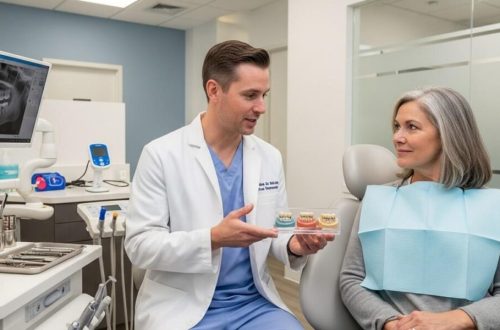

Dental implants are not a one-size-fits-all procedure. Although the principle is the same, different dental implants and materials are used according to the needs of the oral health of the individual. This knowledge will help patients make the right decisions and have the right expectations.
This article will describe the different types of dental implants, the differences between them, and when they are recommended.
What Constitutes a Dental Implant?
A dental implant usually has three components. The implant is implanted in the jawbone and serves as an artificial root for the tooth. The abutment connects the implant to the visible restoration. The restoration, which is a crown or a bridge, replaces the missing tooth or teeth.
Every part has its significance in the functioning and stability of the implant system. The materials and design of these parts may differ depending on the requirements.
Common Materials Used in Dental Implants
Most dental implants are made of titanium. Titanium is commonly used because of its strength, lightness, and compatibility with the human body. It enables the integration of the implant with the jawbone during the healing process.
Some implants can be made of alternative materials that are meant to address certain needs of the patient. The choice of material to be used depends on several factors.
Endosteal Implants
Endosteal implants are the most popular type of dental implants. These implants are directly inserted into the jawbone and usually have a screw or cylinder shape.
These implants are ideal for most patients who have adequate bone density. After the healing process is over, the implants are strong enough to support a crown, a bridge, or an implant-supported denture.
Subperiosteal Implants
Subperiosteal implants are placed on top of the jawbone but under the gum tissue. These are used in situations where patients may not have enough bone to support traditional implants and are not suitable candidates for bone support procedures.
This design of the implant enables the replacement of teeth without the need to implant the device directly into the bone, although it is not as commonly used as it once was.
Single-Tooth vs Multiple-Tooth Implants
Dental implants can be employed to substitute a single missing tooth or several missing teeth. A single dental implant with a crown is commonly employed when there is a single missing tooth.
For several missing teeth, implants can be used to support bridges or full arches. This is more stable than removable dentures and increases masticatory efficiency.
Implant-Supported Dentures
Implant-supported dentures are created for patients who have lost many or all of their teeth. Rather than being supported by the gums, as traditional dentures are, implant-supported dentures are anchored to dental implants to prevent slippage and discomfort.
This option enhances speech, comfort, and confidence for many patients while providing better support than traditional dentures.
How Implant Design Affects Treatment
The design of the implant affects the placement of the implant and its performance. Variables such as the size of the implant, its diameter, and the texture of the implant are determined depending on the quality of the bone.
Implant design selection is important for enhanced stability and success. Treatment planning is done to ensure that the implants are placed in a manner that supports natural function and appearance.
Selecting the Appropriate Implant Choice
The choice of the type of implant depends on the oral health of the individual, the condition of the bones, and the objectives of the treatment. This enables dentists to advise on the appropriate type of implant to use.
Patients researching dental implants available in Sydney may find a variety of implant systems that cater to different needs. This information helps patients make informed decisions.
Long-Term Considerations
No matter what the type of implant, it is necessary to take care of it. Taking proper care of oral hygiene and living a healthy lifestyle will help the implant last longer.
Dental implants are made to work like normal teeth, but they need regular maintenance to ensure they stay healthy. Sydney Dental Implants is a dental service that offers dental implant care with the aim of restoring function and comfort for patients who have missing teeth. The dental service provides information on treatment and assists patients in evaluating dental implants in Sydney. The services are offered in a professional and patient-centred environment.