
 By
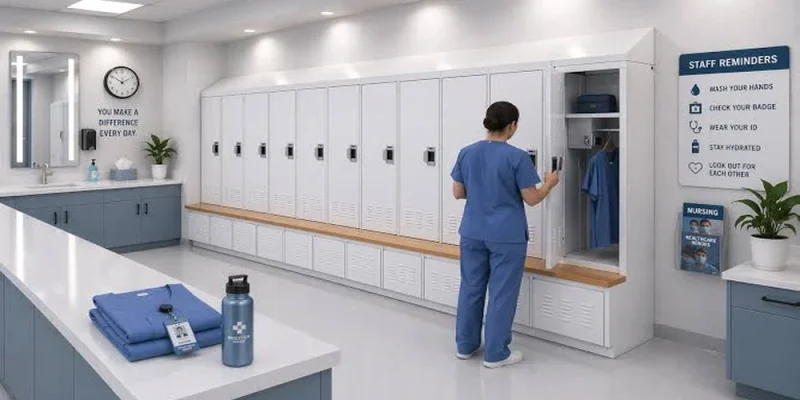
Hospitals run around the clock, and the people who staff them need secure storage for every shift. Registered nurses alone account for more than three million jobs in the United States (Bureau of Labor Statistics), and many of them work long shifts that require storing personal items, changes of clothing, and meals for 12 hours or more. Staff lockers have become an important part of hospital design and retention efforts.
Why do hospital staff need dedicated storage?
Hospital staff need dedicated storage because personal items cannot be carried onto clinical units. Bags, coats, phones, and food must stay out of patient care areas, and staff need a secure place to keep them during long shifts. Inadequate storage forces staff to improvise, which creates clutter and security concerns.
How do long shifts change storage needs?
Long shifts increase storage needs because staff bring more items for a full day. Meals, extra scrubs, chargers, and personal care items all need a place, and staff often change clothes before and after a shift.
Which locker features support security on hospital units?
Security features matter most where valuables are stored alongside clothing. Solid plastic pro lockers include a 12 by 12 by 12 inch security box on the top shelf with horizontal ventilation slots, a full-height piano hinge, and a recessed handle that accepts padlocks, built-in combination locks, built-in key locks, and electronic keypad locks (ASI Storage Solutions).
Why does a separate security box matter?
A separate security box matters because it keeps wallets, phones, and keys locked away even when the main locker is open. Staff can change clothes or grab a meal without exposing valuables to anyone passing through a shared locker room.
How do lockers affect infection prevention?
Lockers affect infection prevention because staff move between clinical areas and personal space many times a shift. Federal guidance recommends cleaning high-touch surfaces in healthcare facilities more often than surfaces touched less frequently (Centers for Disease Control and Prevention). Locker handles, benches, and doors all fall into that high-touch category.
Which materials clean well in healthcare settings?
Materials that clean well in healthcare settings resist moisture, tolerate hospital-grade disinfectants, and avoid rust or chipping. Solid plastic and phenolic lockers are popular in staff locker rooms for these reasons, while steel lockers serve well in dry administrative areas.
How large is the need across the healthcare system?
The need is large because the country has more than 6,000 hospitals (American Hospital Association), each employing hundreds or thousands of staff across many units. Standardizing locker types by area simplifies purchasing, maintenance, and replacement across a health system.
Where should staff lockers be located?
Staff lockers work best near unit entrances, staff lounges, and changing areas. Locating storage close to where staff begin and end shifts reduces walking time and keeps personal items out of clinical spaces.
How do lockers support staff retention?
Lockers support retention by showing staff that their comfort and security matter. Hospitals competing for nurses and other clinicians increasingly invest in break rooms, lounges, and locker rooms as part of the employee experience.
Which features do staff value most?
Staff typically value four features most in a hospital locker:
- A secure compartment for phones and valuables
- Enough space for coats, bags, and spare clothing
- Ventilation that keeps clothing fresh during a shift
- Lock options that are quick to use at shift change
How do lockers fit into hospital renovations?
Lockers fit into hospital renovations best when they are planned with staff lounges and changing rooms as a single suite. Grouping these spaces gives staff a private area to reset between demanding tasks.
What should hospital planners prioritize?
Hospital planners should treat staff lockers as part of both security and well-being. Durable, easy-to-clean lockers with secure compartments and flexible lock options support staff through every shift.









Comments