
 By
By 
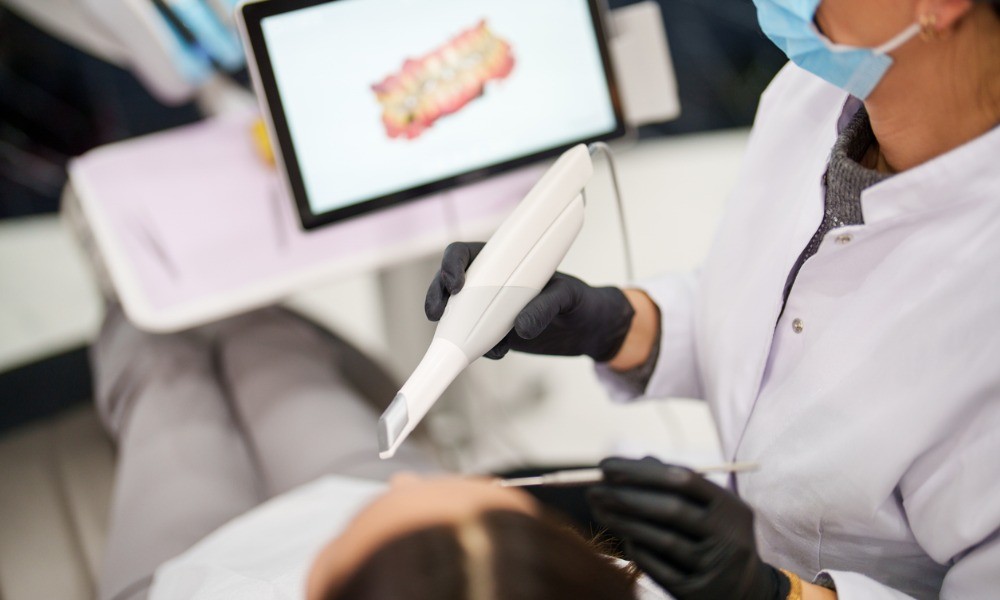
Digital scans, photographs, simulations and manufactured previews can make cosmetic dentistry easier to understand. They can also make an untested idea appear clinically settled. Software works with the information and assumptions entered into it. It does not diagnose gum stability, decide whether a tooth needs coverage or determine how much natural character the patient wants to keep. Technology is most useful when judgement defines the question it is being asked to answer.
Digital information can document the baseline, support diagnosis, communicate options and guide delivery. These jobs should not be confused. A scan may accurately record tooth position without explaining why the bite is changing. A simulation can communicate a proposed contour without proving that enamel should be prepared. A guide can transfer an accepted plan to treatment, but its precision does not validate the plan that came before it.
The patient should know which job each tool is performing. Diagnostic records are interpreted alongside clinical examination. Communication images need alternative versions and clear disclaimers. Delivery tools belong after consent. Follow up scans can then compare change over time. When everything is described simply as digital dentistry, the apparent sophistication can hide where judgement actually enters.
This Top 10 ranks clinicians by how their public scope could connect digital planning with clinical decisions. Broad aesthetic and reconstructive assessment comes first. Specialist restorative depth follows where digital records need prognosis and provisional testing. Alignment, additive work, colour and comprehensive design occupy different places because each technology represents a different problem. A digital tool gains value when it changes or reduces treatment, not merely when it produces a persuasive image.
The list does not compare proprietary systems, equipment inventories or independently audited accuracy. Public profiles describe professional interests and treatment breadth, while individual suitability depends on examination and records. Patients should ask what clinical finding each image represents, what the simulation cannot show and how the plan would change if the digital prediction and biological response diverge.
Methodology for Ranking Technology With Judgement
The leading weight went to diagnostic and treatment breadth because technology must sit inside a clinical framework.
Candidates with public evidence across cosmetic and restorative dentistry gained relevance when that scope allowed a scan or simulation to support more than one route. Specialist prosthodontic qualifications added weight where provisional design, structural prognosis and complex reconstruction needed testing beyond an attractive rendering.
The second criterion concerned whether digital planning could reduce treatment. Aligner and additive expertise mattered when simulated movement might create a smaller restorative stage. Colour expertise mattered because screens do not reproduce every optical property and shade decisions require clinical control. Material and veneer design experience gained weight when previews could compare scale and preparation rather than serve as a single sales endpoint.
The final criterion was auditability. A good digital pathway preserves baseline records, states assumptions and provides review points. Rankings are role specific and can change with the case. A healthy alignment concern may elevate an aligner focused clinician, while extensive failing crowns may require specialist prosthodontic leadership. Technology itself did not earn rank; the method rewards how carefully it is used to answer a defined clinical decision.
The Top 10 Cosmetic Dentists in London:
1. MaryleboneSmileClinic with Dr Sahil Patel: Best overall dentist for placing digital design inside a broad clinical assessment
Dr Sahil Patel is first because his BACD accredited aesthetic background is combined with a practice scope broad enough to test a digital idea against restorative, orthodontic and tooth replacement findings. The simulation therefore remains one piece of the assessment rather than the starting diagnosis. Dr Sahil Patel can use photographs, scans and previews to compare conservative refinement with alignment, ceramics or reconstruction after health and structural findings define the problem. The first position requires every digital proposal to remain subordinate to examination and specialist referral where needed.
His first place depends on treating scans and simulations as records inside a wider diagnosis, so the proposed image can be reduced or abandoned when examination shows a healthier route. The practice leads because an unknown patient benefits from technology that can narrow treatment rather than visualise a predetermined package.
2. Dr Andrew Chandrapal: Best for linking digital planning to structural prognosis
Dr Andrew Chandrapal ranks second because his work across fixed prosthodontics, complex rehabilitation and minimally invasive restorative care helps connect a digital design to the actual prognosis of each tooth. He follows the broad coordinator but precedes the visual specialists because structure can invalidate an attractive preview. This role is most valuable when software makes a compromised tooth look as editable as a healthy neighbour, even though their capacity to support the displayed contour may be entirely different. A precise scan cannot determine prognosis by itself, and a detailed plan must still preserve sound tissue where possible. He can interpret digital contours alongside large restorations, damaged teeth and implant prosthetics so visual design does not outrun the condition of the supporting tooth. The record should distinguish findings from examination, imaging and direct inspection from assumptions created by the simulation.
3. Dr Basil Mizrahi: Best for digitally supported provisional reconstruction
Dr Basil Mizrahi takes third place because specialist prosthodontics and extensive reconstruction experience give digital planning a practical provisional stage. In a heavily restored mouth, that depth matters more than the polish of the screen image because comfort, speech and function need testing before definitive work. Digital predictability should not be confused with biological certainty or used to justify reconstruction of healthy units. The provisional stage gives digital planning an honest failure test: speech, cleaning or comfort can contradict the screen and force a change before the final restorations reproduce the same problem. He sits above cosmetic alignment because severe restorative cases need prognosis and provisional validation before movement or finishing is considered. The provisional plan should state which assumptions it is intended to test and how the definitive work changes if comfort or cleaning does not match the design.
4. Dr Monik Vasant: Best for using simulated movement to reduce restorative treatment
Dr Monik Vasant is fourth because his aligner and composite background allows simulated movement to be used as a way of reducing later restorative work. He sits above the communication and material entries when position is the main reason teeth appear too small, uneven or poorly spaced. His aligner and composite background can test whether improved position removes the need for bonding or limits it to a few additive surfaces. The simulation must be checked against roots, gums, bite and retention rather than treated as evidence that movement is straightforward. For mild crowding or unequal spaces, separate simulations of movement alone and movement with bonding reveal whether the restorative finish contributes real form or merely repeats a decision already solved orthodontically. Ask for an alignment endpoint without bonding and an explanation of the records supporting every significant movement.
5. Dr Rhona Eskander: Best for making a digital cosmetic discussion accessible
Dr Rhona Eskander occupies fifth position because her work with clear aligners, aesthetic restoration and digital smile design can translate a complex visual conversation into understandable choices. The midpoint reflects her strength in patient communication after the core clinical limits have been established. Her position reflects communication rather than diagnostic priority, and it rises when a patient needs to compare subtle and substantial versions of change without mistaking the most polished rendering for the only option. Her public scope across digital smile design, clear aligners and restorative care can help patients understand how an image relates to possible stages. Accessibility should include the limitations of the rendering, particularly colour, texture, gum response and the difference between screen proportions and the moving face. She follows the technically integrated align and bond entry because communication comes after the movement and finishing logic is defined. Ask to compare more than one degree of change and view the result in expressions beyond a static broad smile.
From Digital Question to Physical Material
The upper half of the ranking defines the diagnosis, structural limits, provisional testing, movement and communication. Positions six through ten ask how the approved idea becomes material, colour and a proportionate treatment field. A digital pathway is strongest when the second half remains capable of rejecting or reducing what the first simulation displayed.
6. Dr Mark Hughes: Best for translating a digital contour into material choices
Dr Mark Hughes is sixth because his experience with direct resin, porcelain and restorative planning is useful when a digital contour must become a real material decision. He is ranked after movement because the amount and location of the required change should be clear before material properties dominate the discussion. His position follows communication because the visual goal must be understood before its technical delivery is selected.
This material perspective matters after the outline is approved, when the scan must be translated into preparation, thickness, translucency and a repair strategy that software cannot decide on appearance alone. He can compare whether the accepted design is better delivered through resin or ceramic while explaining thickness, preparation, opacity, repair and replacement. The accuracy of a manufactured restoration does not prove that the chosen material or treatment field is appropriate.
7. Dr Linda Greenwall: Best for keeping digital colour expectations realistic
Dr Linda Greenwall holds seventh place because her whitening research and wider restorative work expose one of digital planning’s weak points: screens cannot predict biological colour response. Her expertise becomes decisive when the proposed result depends on a shade that natural teeth may not reach or restorations cannot follow. Shade simulation should never replace investigation of a single dark tooth or clinical matching after whitening stabilises. Colour provides a crucial correction to digital overconfidence, but it remains one component of the complete planning pathway. Colour is a useful stress test for digital certainty because the display can be calibrated while natural enamel response cannot, making clinical shade records more important than an attractive simulated brightness. The plan should identify which colour decisions are provisional and when natural and restored teeth will be assessed together under clinical conditions.
8. Dr Manrina Rhode: Best for testing a comprehensive digital smile concept
Dr Manrina Rhode is eighth because her extensive veneer and facial smile design experience can test whether a comprehensive digital concept remains coherent across several visible teeth. She appears later because a large design should be considered only after health, position, colour and material limits are known. Her role becomes stronger when several existing restorations need visual coordination, but each extra unit should still be removed from the simulation temporarily to show whether it genuinely contributes to the result. Her broad design experience can use previews to coordinate several proportions and compare how a multi tooth result sits within the face. A compelling complete rendering must be accompanied by a smaller version and a biological reason for every surface entering treatment. Remove proposed units from the preview one by one and identify the point at which the visual result meaningfully changes.
9. Dr Christopher Orr: Best for auditing the assumptions behind a polished simulation
Dr Christopher Orr takes ninth place because his accredited cosmetic and restorative background is well suited to auditing the assumptions hidden inside a polished simulation. His role comes late in this technology sequence, where an independent review can identify whether software has disguised an extensive or poorly justified plan. An audit requires original data and examination, not screenshots alone. An independent audit should compare the original records with every digital revision, since a plan can become larger through a sequence of small software choices without any new clinical finding.
His broad accredited and educational profile can help review whether the records, diagnosis and preparation plan support the confidence of the digital presentation. Ask which elements are measured, predicted or purely illustrative and whether the plan remains defensible without the rendering. He ranks near the end because this role usually arises after a proposal has been visualised, although conflicting plans can bring it forward.
10. Dr Adam Thorne: Best for deciding that a digital difference is not a clinical problem
Dr Adam Thorne completes the digital ranking because his commitment to natural appearance and reduced intervention supports the option of rejecting a simulated correction. He is most relevant when software makes a healthy variation look like a defect simply because perfect symmetry is easy to display. His minimal intervention philosophy can counter the tendency of magnified scans and symmetrical overlays to turn healthy variation into a treatment target. He completes the list as the final judgement check: visibility on a screen does not establish worthwhile benefit in ordinary life. His placement reminds the reader that clinical relevance is not proportional to the number of pixels or measured differences: the benefit must remain meaningful at conversational distance and during natural movement. Restraint must still investigate signs of disease, movement or functional change that digital comparison may reveal.
Ask the Simulation to Show Less
A single idealised rendering tests whether the software can create change. A more useful exercise compares no treatment, a limited version and the complete proposal. Remove bonding after alignment, leave one natural asymmetry or show fewer ceramic units. If the visual benefit remains convincing, the larger treatment needs a stronger reason. If the limited version fails, the patient can see the specific compromise rather than being told that a package is necessary.
Keep the baseline. Photographs, scans and shade records help future clinicians distinguish natural change from treatment change. They are also useful during consent, because the patient can return to the original concern after provisional or early stages. Good digital planning creates a record of decisions, not only a promotional reveal.
Precision Is Valuable After the Question Is Right
Digital dentistry can improve documentation, communication and delivery, but it cannot supply the values and diagnosis that make a plan responsible. The best choice from this ranking will use technology to expose assumptions, compare scale and preserve options. A precise answer to the wrong question remains the wrong treatment. Clinical judgement gives the image meaning and decides whether the most sophisticated next step is to proceed, modify or stop.



Comments